
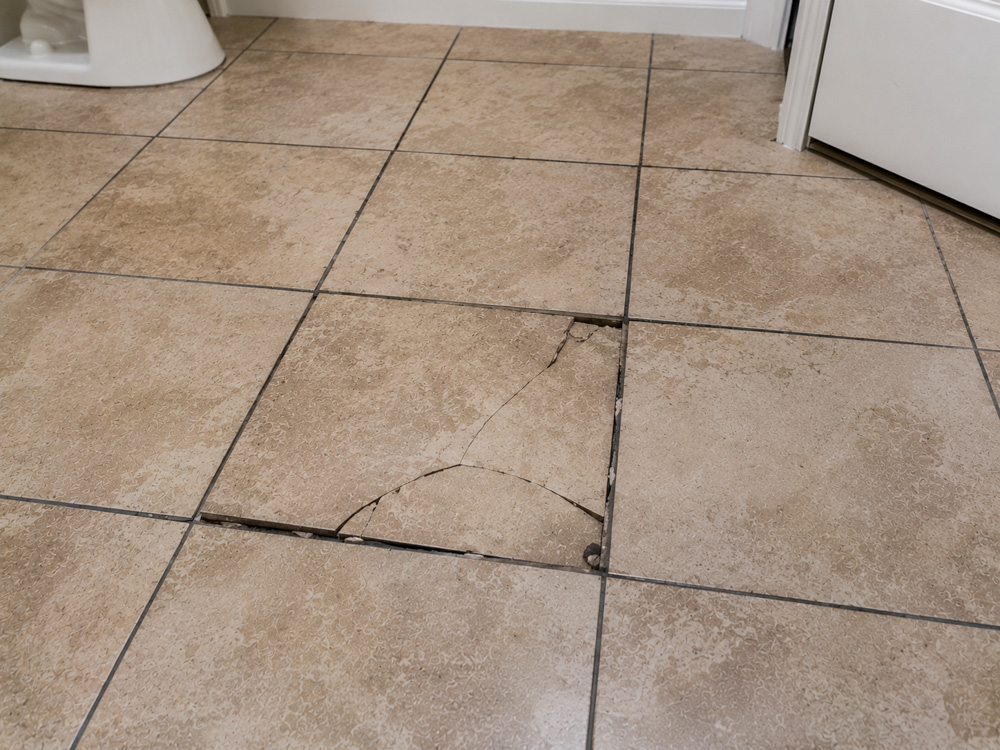
Short answer: Grout usually cracks because something is moving — the slab, the subfloor, or the tile itself — or because grout was used where a flexible joint belongs. Other common causes are a weak original grout mix and tiles that have lost their bond underneath. A few hairline cracks are often a simple repair. Cracks paired with loose or hollow-sounding tiles mean there's a bigger issue below that needs attention before the grout is fixed.
What Causes Grout to Crack?
- Normal movement. Homes expand and contract with temperature and humidity changes. Grout is rigid, so it cracks where that movement concentrates.
- Missing movement joints. Tile Council of North America guidelines call for flexible movement joints at room edges and changes of plane. When an installer grouted those spots instead, cracks along walls and corners are common.
- Weak original grout. Too much water in the mix or rushed curing at install leaves grout soft and prone to cracking years later.
- Tile that has lost its bond. If a tile is loose underneath, it flexes when stepped on and breaks the grout around it.
- Age and worn sealer. Unsealed grout absorbs water and cleaning chemicals that slowly weaken it.
Is Cracked Grout a Serious Problem?
It depends on what's around the crack. Try a simple tap test: gently tap the tiles next to the crack with a coin or screwdriver handle. A solid sound means the tile is bonded. A hollow, clicking sound means it isn't.
- Hairline crack, solid tiles: usually cosmetic. Repair and reseal.
- Cracks along walls or corners: often a missing movement joint. These need flexible sealant, not more grout.
- Cracks plus hollow or loose tiles: the tile has lost its bond. Re-setting it comes first.
- Cracks in a shower: fix them promptly — they let water reach the wall behind the tile.
How Is Cracked Grout Fixed?
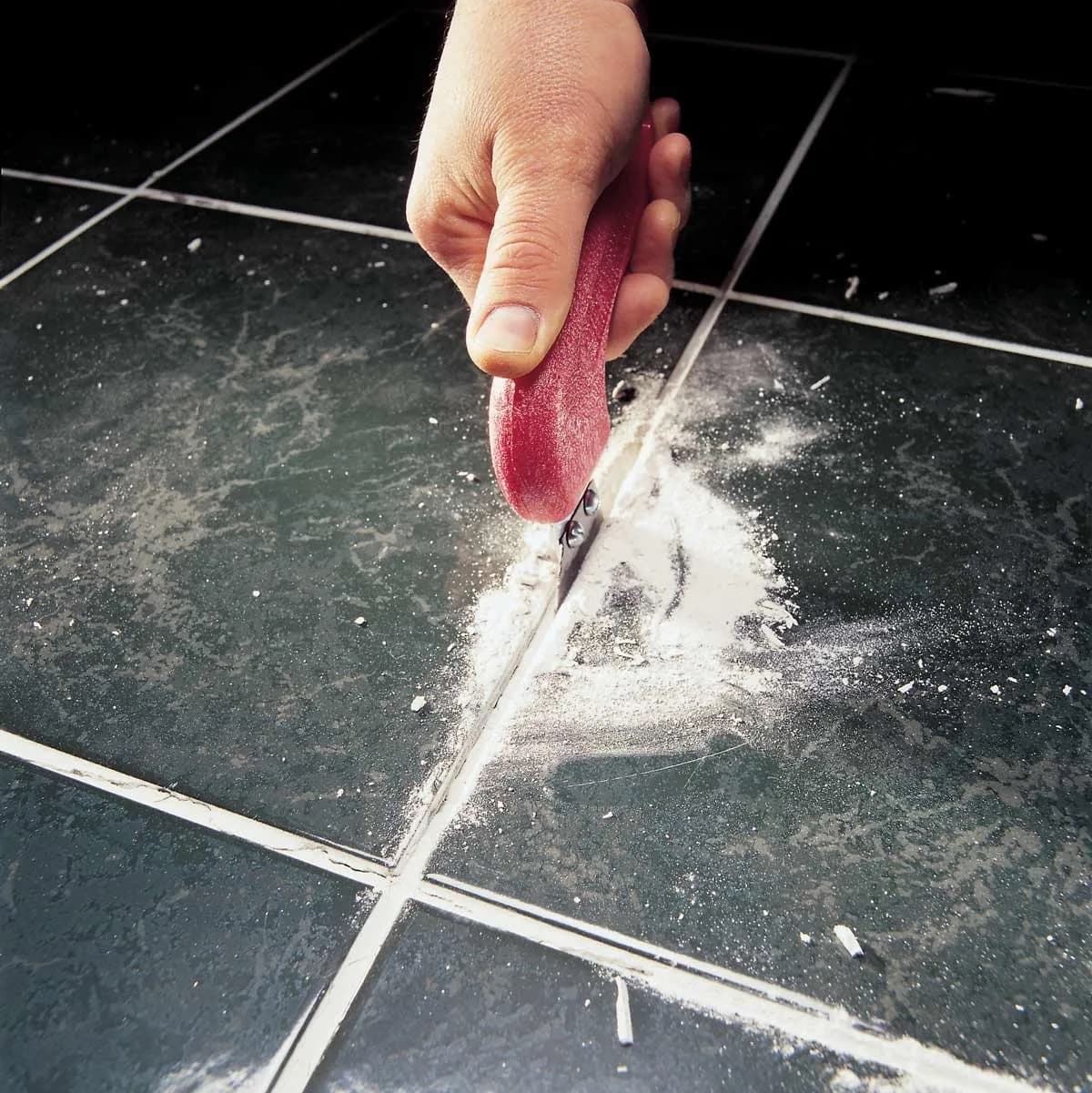
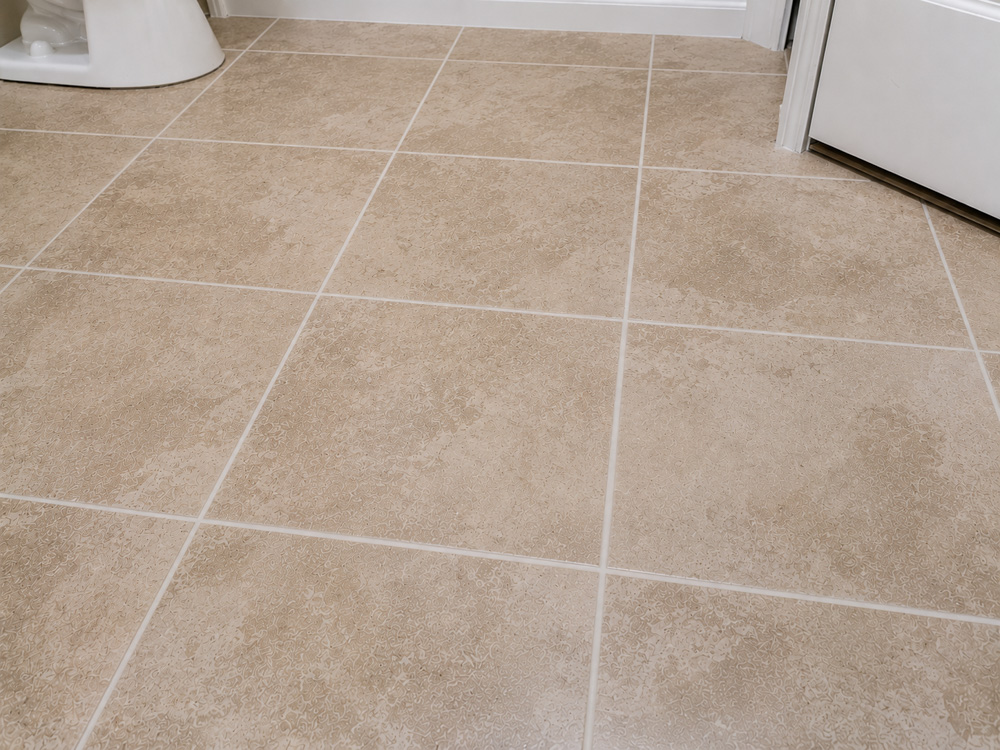
For isolated cracks, our tile and grout repair service removes the damaged grout, fills it with fresh, color-matched grout, and reseals. Cracked or loose tiles can be replaced or re-set without tearing out the rest of the floor. When cracking is widespread, full re-grouting replaces every line at once so the whole surface is uniform. Corners and edges that need to flex get proper caulking instead of grout.
For a broader look at chips, cracks, and loose tiles, see Tile Repair 101.
Frequently Asked Questions
Can I just put new grout over cracked grout?
It rarely lasts. A thin layer of new grout over old, cracked grout doesn't bond well and usually pops out within months. The damaged grout should be removed to a proper depth first, and the cause of the crack — movement or a loose tile — should be fixed at the same time.
Will the repaired grout match the rest of my floor?
We color-match repairs to your existing grout. If your old grout has faded or stained unevenly, a color seal over the whole floor afterward makes every line the same shade.
Why does the grout keep cracking in the same spot?
Repeat cracks almost always mean the cause wasn't fixed — usually a loose tile or a joint that needs to flex. Re-grouting that spot without fixing the cause just resets the clock.
The Grout Restorer has repaired tile and grout in Ocoee and across Central Florida since 1970. Owner Martin Cawley's small team does every repair directly.
Rated 4.9 stars on Google · Free on-site assessments · Mon–Sat, 8 AM–6 PM · 407-256-3522
Last updated: November 2026